


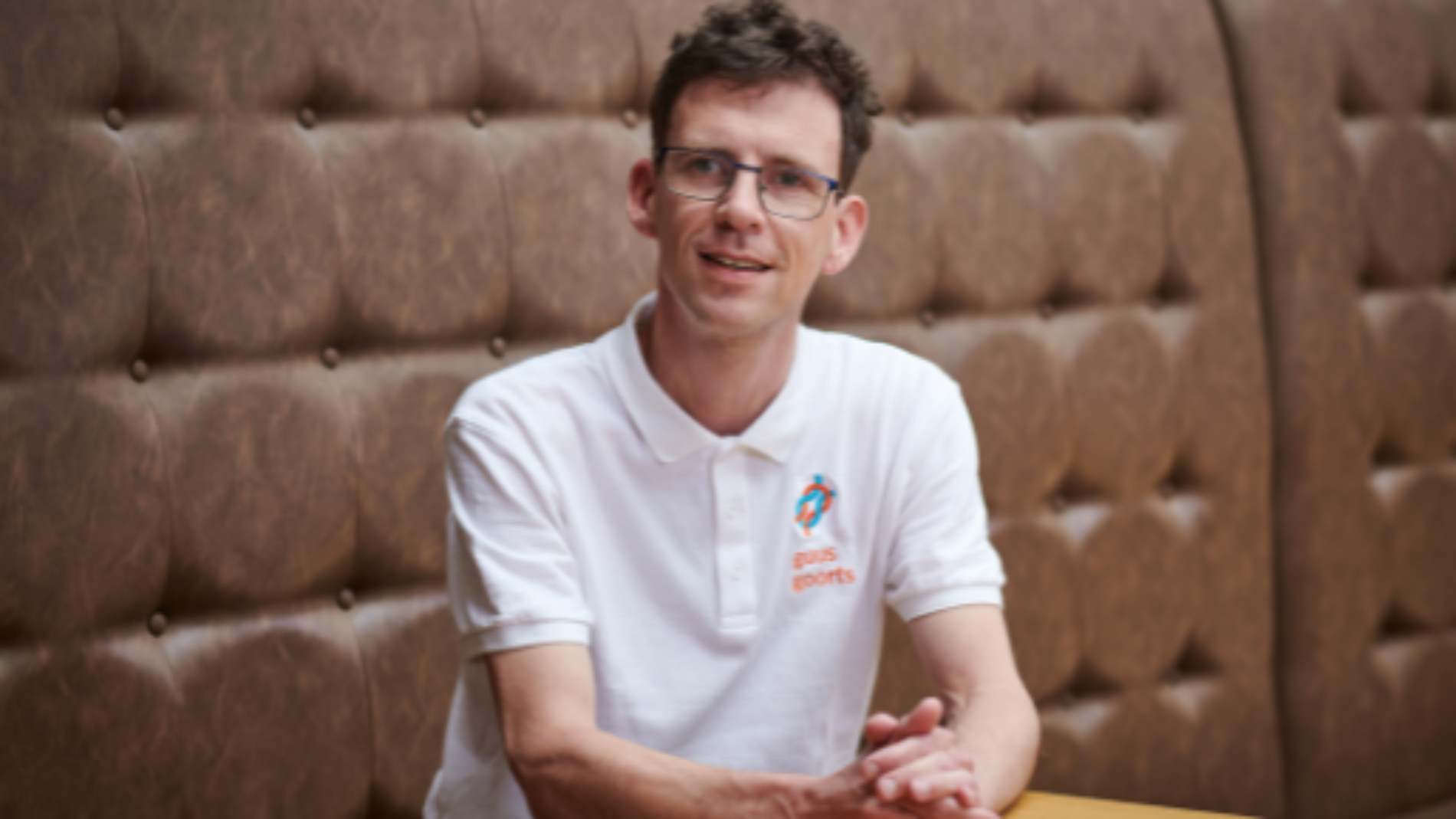
Guus Goorts: how online student recruitment works
Guus Goorts is a digital marketer specialising in online student recruitment.
International exchange and the education sector are close to his heart. At age 18, he spent several months working in an international team at an Italian campsite – and then 6 months as a volunteer teacher in Ghana. After an exchange from Maastricht University to National University of Singapore, he ended up living in Singapore for 10 years. Those experiences have made him into who he is today.
Over the years, he realised more and more that online campaigns don’t stand by themselves. To successfully recruit students, everything needs to align: strategy, campaigns, the institution’s website, follow-up, analytics — so institutions need to take charge.
This realisation made him write the book Successful Student Recruitment with Google Ads, which is available for free on his website, as well as a suite of online marketing courses for higher education professionals.
Guus, welcome, and thanks for sharing your thoughts with Monsuni. How fast is international recruitment moving from a mixed online-offline kind of organisation to a full online scenario?
Due to COVID, many Universities have had to move from, say 30/70% on/offline to 100% online marketing all at once. It has been challenging for many people. It’s like you’re a football player, and all of a sudden, you are forced to play tennis – and get good at it!
Because it’s been a sustained situation for almost 1.5 years now, a lot of learning has taken place. For example, institutions have learned to make “online” a lot more personal through webinars, peer-to-peer interaction and one-on-one conversations.
Institutions have also learned about the advantages of online marketing: broader reach and fewer barriers to participation. It’s become easier for prospective students to visit a number of virtual events, ask their questions online and perhaps only physically visit their top 1-3 institutions.
But that said, I believe that as travel gradually becomes easier, institutions will take a step back from fully online and restart offline activities: be present at fairs again and organise their own physical open days.
It won’t go back to a 30/70% on/offline split, because everyone is going to keep what works. Perhaps it will settle at a reversed ratio, with 70% of the activity taking place online and 30% still being offline.
In the later stages of the decision cycle, there is simply no alternative to the deep engagement you can get at a physical event.
If we’d ask you for a year when recruitment will 100% be online only, what would your guess be?
As long as offline learning programmes exist, I believe there will always be some offline marketing activities. In the past period, we’ve learned that you can do more online than we ever imagined.
But we’ve also learned that the focused attention of participants in real-life activities is simply unbeatable.
The Covid-19 pandemic is shifting most of the marketing towards online. As a recognised expert in the field, do you see any overall trends on this?
I see Higher Education Institutions becoming more proactive about their digital marketing and taking things in-house. I also see more attention to the lower part of the funnel – digital marketing used to be more about running marketing campaigns, but now person-to-person engagement also gets the attention it deserves.
I’m not sure if this is all due to the pandemic. I think both trends were there before, but the pandemic has greatly accelerated them.
You just published an ebook titled “Successful Students recruitment with Google ads”. Of course, Google ads are being used in all markets to boost sales. The question here is: Do you reckon universities are ready to use Google ads?
The reason I wrote the book is, on the one hand, Google Ads is made for student recruitment. You can become visible to the right prospective students, at exactly the right moment: when they’re researching study options.
On the other hand, I have witnessed a lot of wasted budgets and opportunities.
Google Ads is an advanced tool and you need to get a whole lot of settings right. Both with the campaign itself and with your strategy, website and follow up. Miss out on something essential, and the whole thing turns into a massive black hole that just sucks up your budget and attention.
I feel that Google Ads is like working with a tiger. It’s extremely powerful, but you can’t look away for even a second, or it might just eat you.
From your perspective, digital marketing is an exercise HEIs should be willing to externalise, or do you think that sooner or later they ought to build their own digital marketing division?
I think the answer to that is different for each institution. One factor is your size. As a smaller institution, you can’t possibly do everything in-house.
But you can’t leave external service providers to their own devices. Agencies need a lot of input to deliver their best work.
So I think at the very least, every institution needs a good digital marketer to serve as a bridge between digital agencies and faculties and make sure all the digital work is aligned.
For somewhat larger institutions, it will pay off handsomely to have a strong digital marketing team at the central level. Even if some jobs are still outsourced, it’s the best guarantee for continuity and alignment.
Photo: https://guusgoorts.com/
Add a Comment